TRACE
An eau de parfum that studies what remains on skin after contact.
- type
- self-initiated brand concept
- scope
- logotype, packaging, keyframes, strobe films, sound
- films
- 3 verticals, 7 to 10 s each
- tools
- Nano Banana, Kling; edit and sound built in code
about this project
Perfume is usually sold as presence: a cloud that arrives before the body does. TRACE starts at the other end, with what is left once the body has gone.
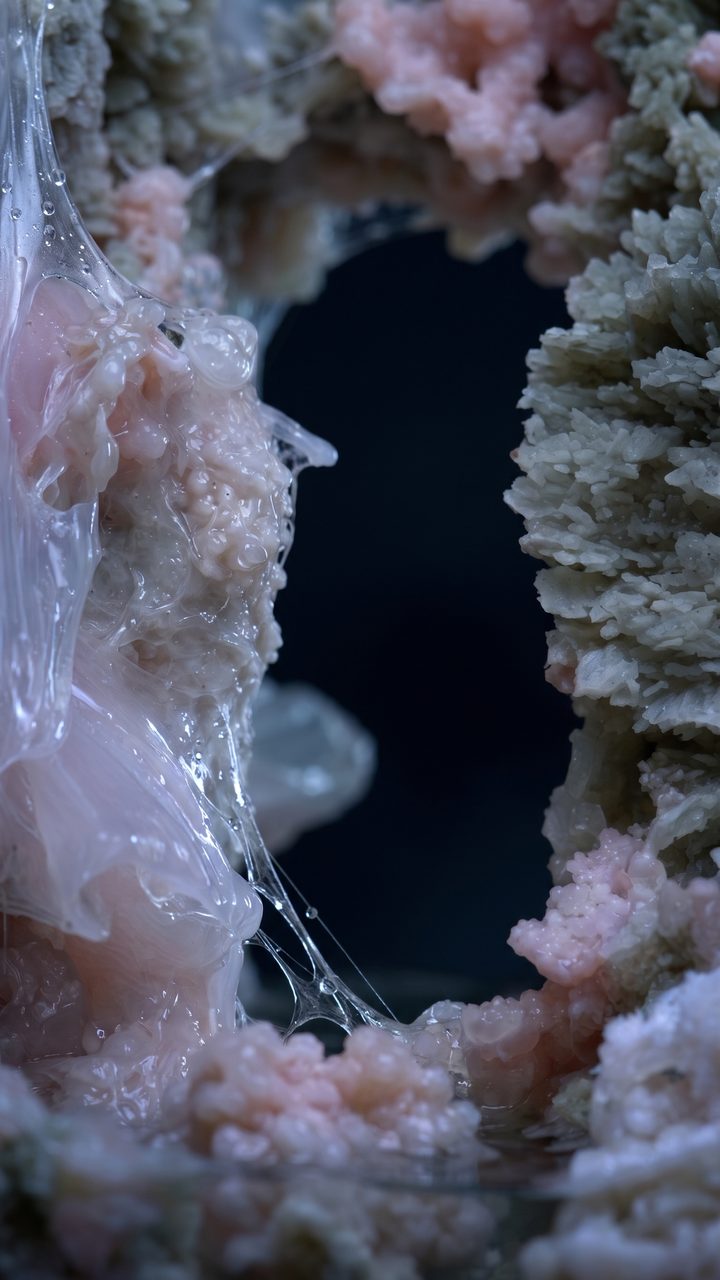
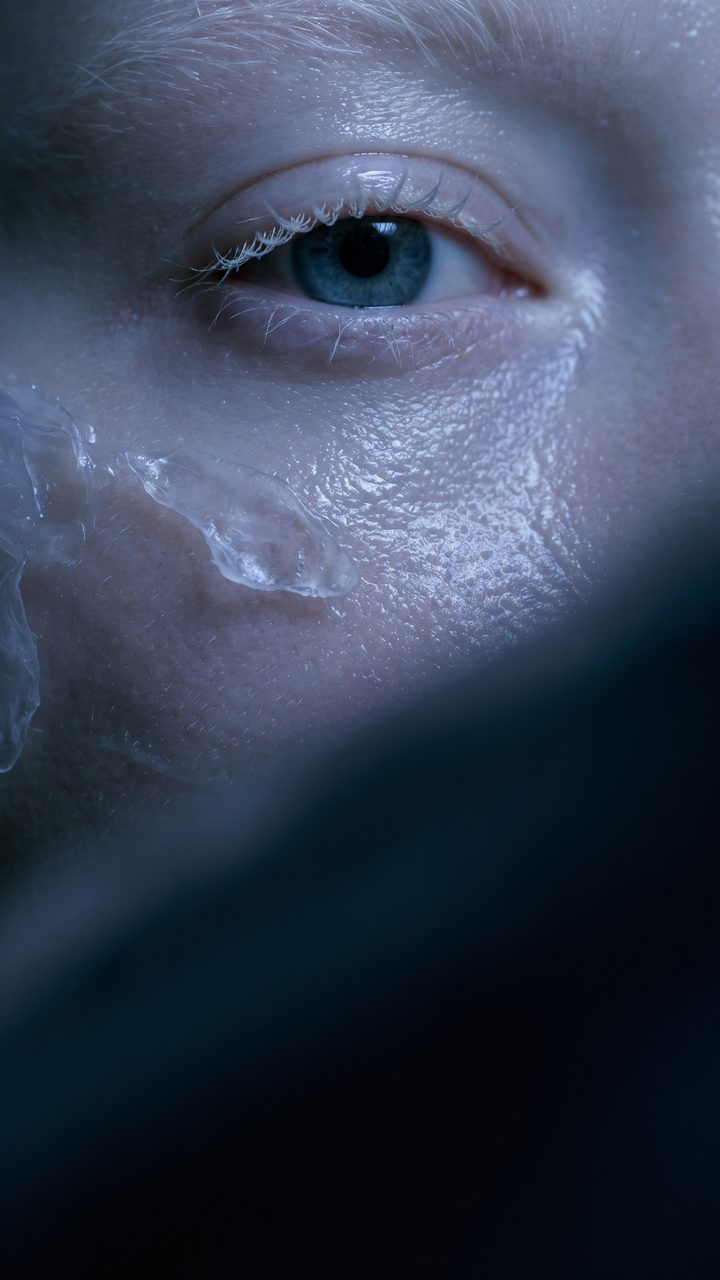
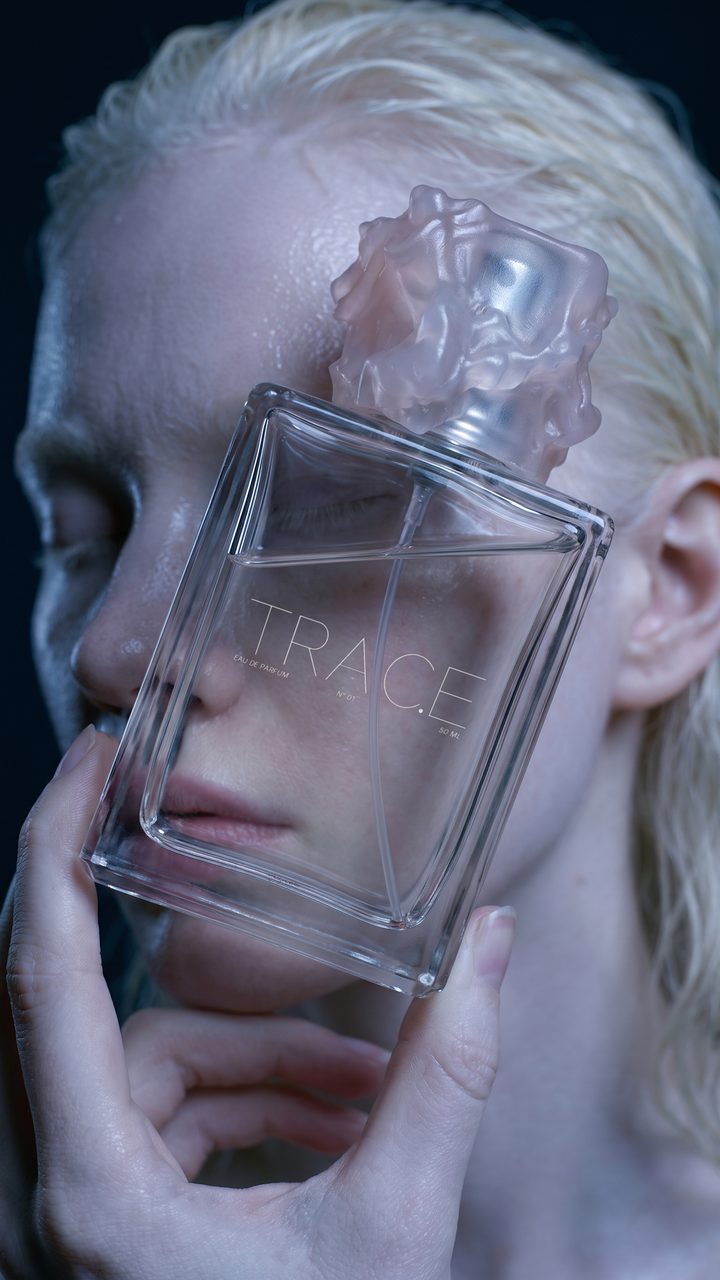
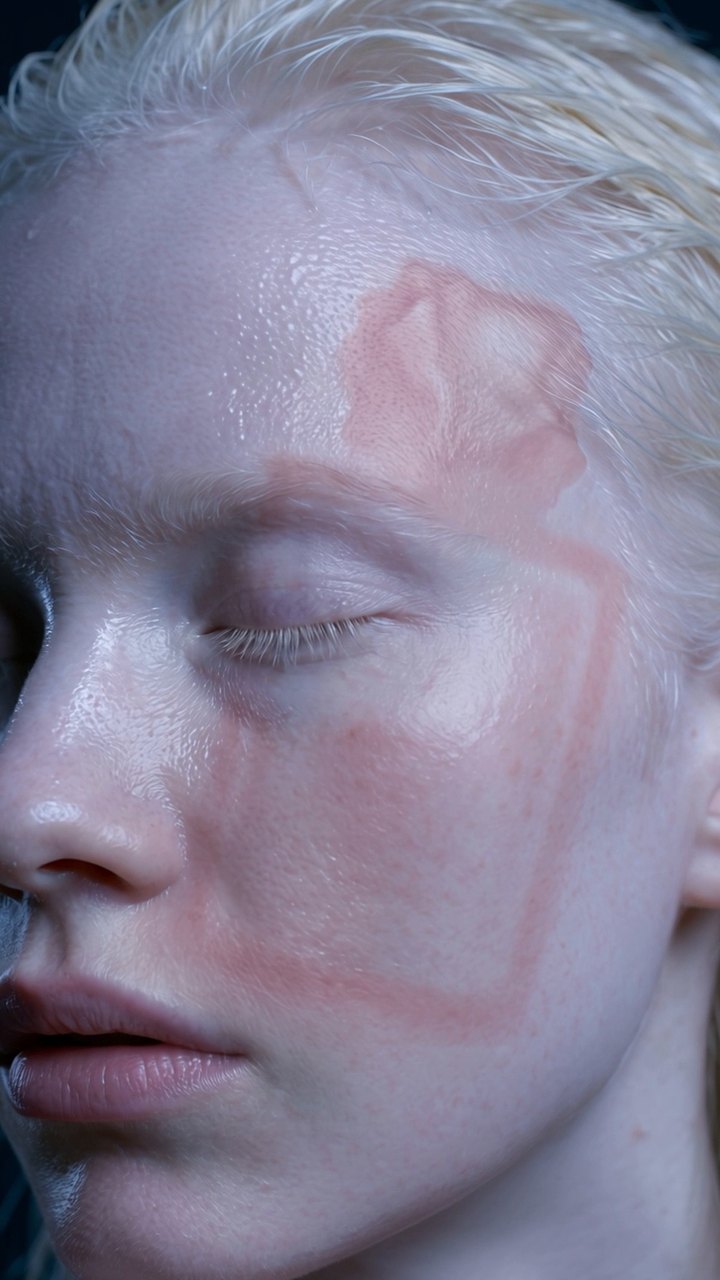
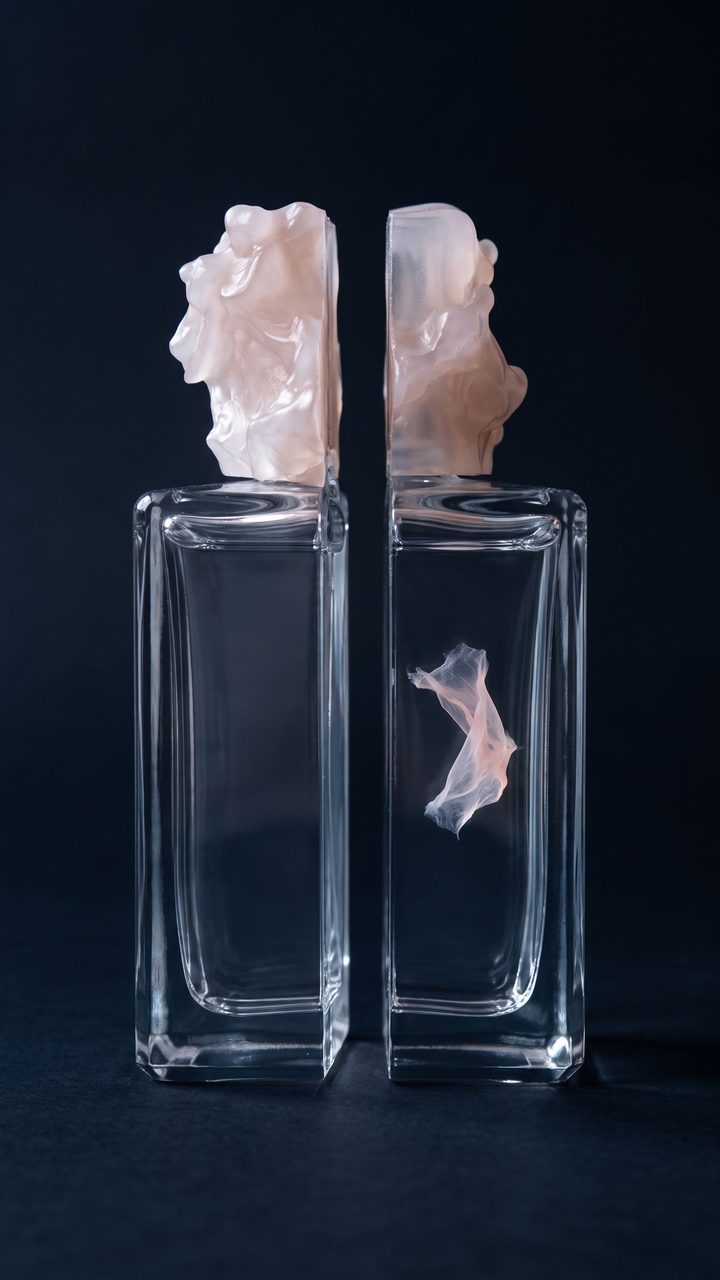
A trace is an index in Peirce’s sense. It doesn’t depict anything; it points to a contact that has already happened, like a footprint or the warmth left on a chair. So the brand never shows the scent. It shows pressure and its afterimage: glass on skin, an outline that outlasts the touch, a membrane held inside a bottle that has been cut open.
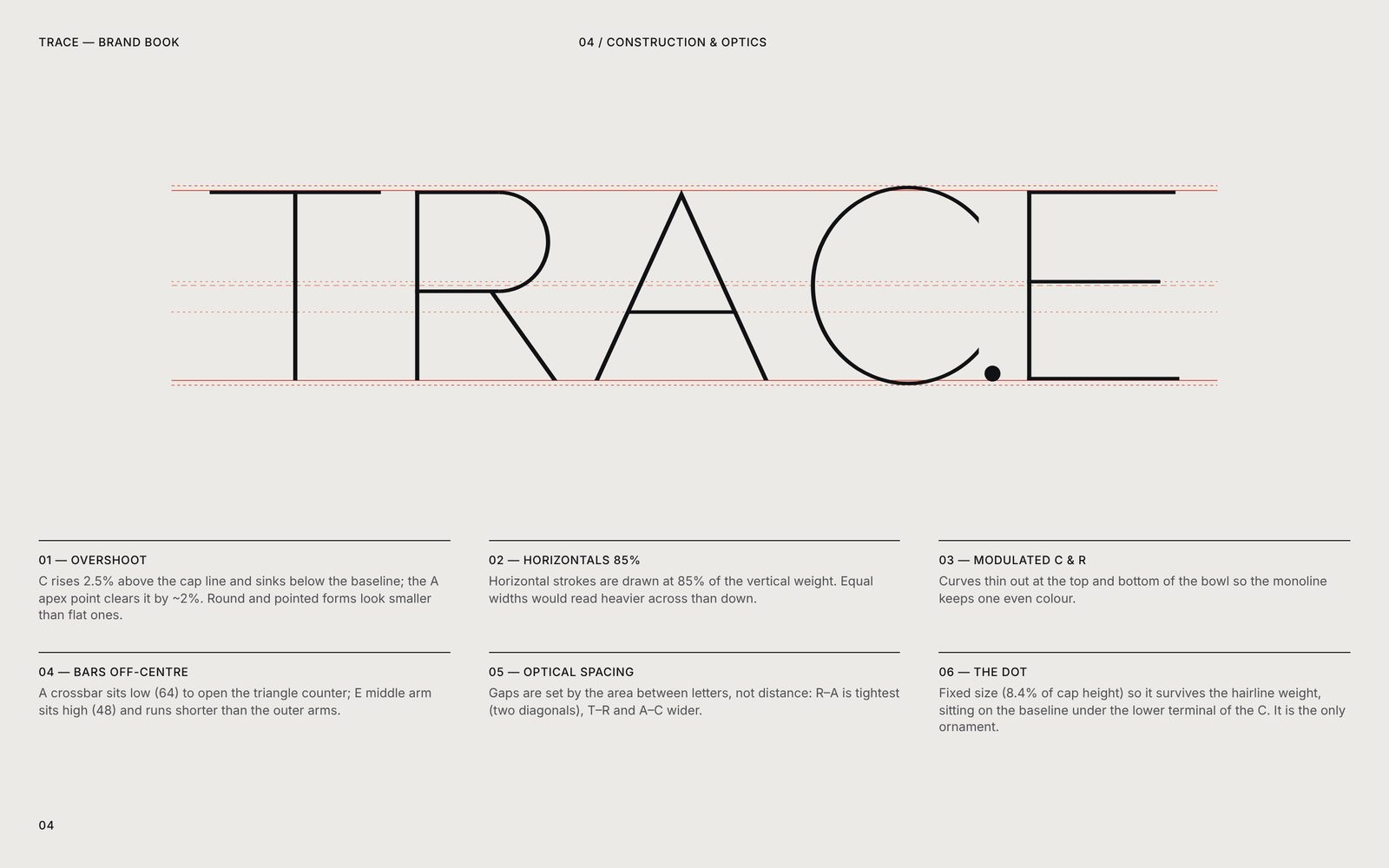
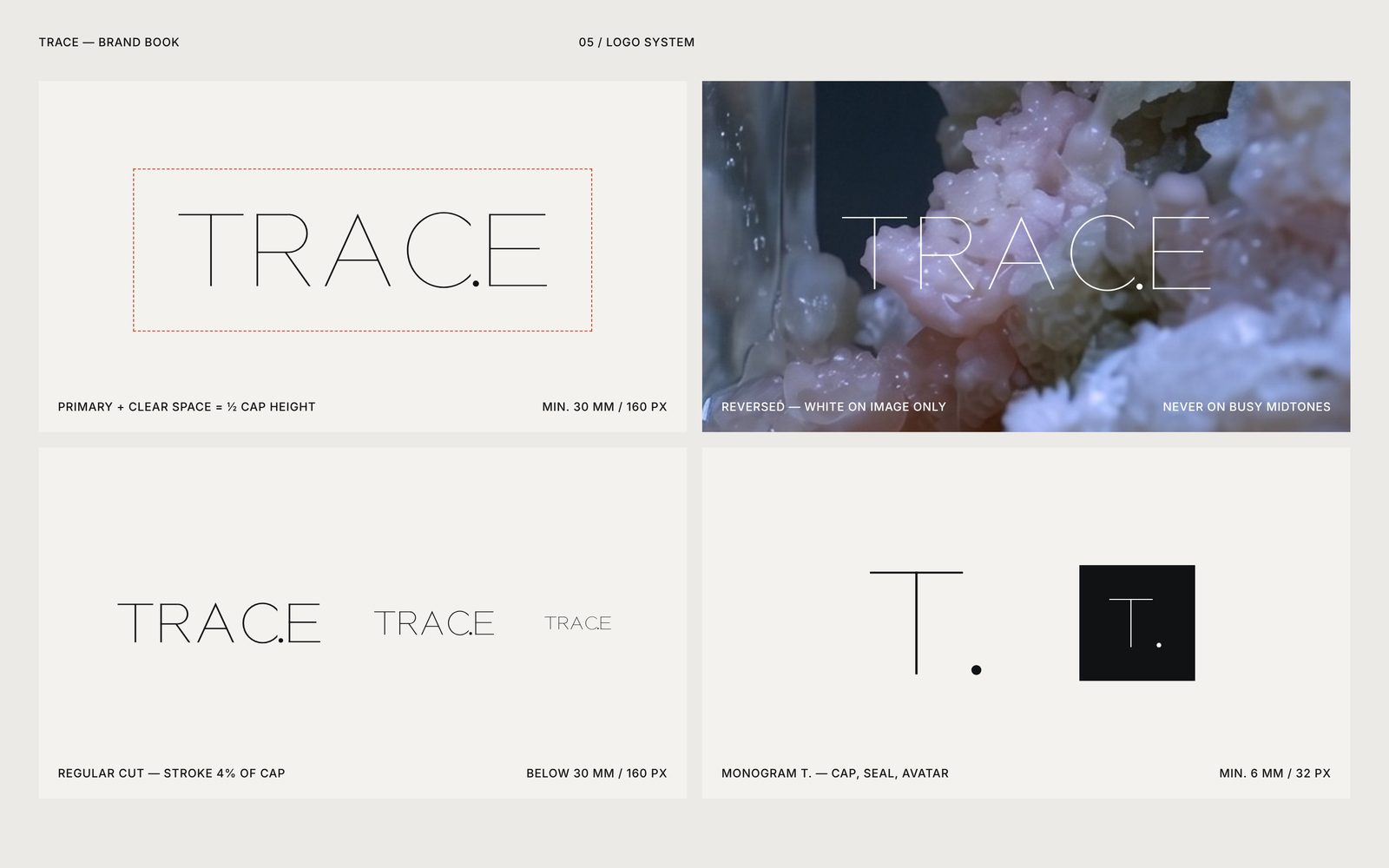
The wordmark carries the same logic in one glyph. The dot has slipped out of the C and stays close, displaced but still part of the name. In the films the logo is the only thing that doesn’t move. Images pass through it two or three frames at a time, too fast to settle, so what the viewer keeps is an afterimage of frames they never fully saw.
films
Three verticals on one constraint: the logo is the only fixed point. The strobe turns watching into remembering, and each film ends on what is left behind.
keyframes
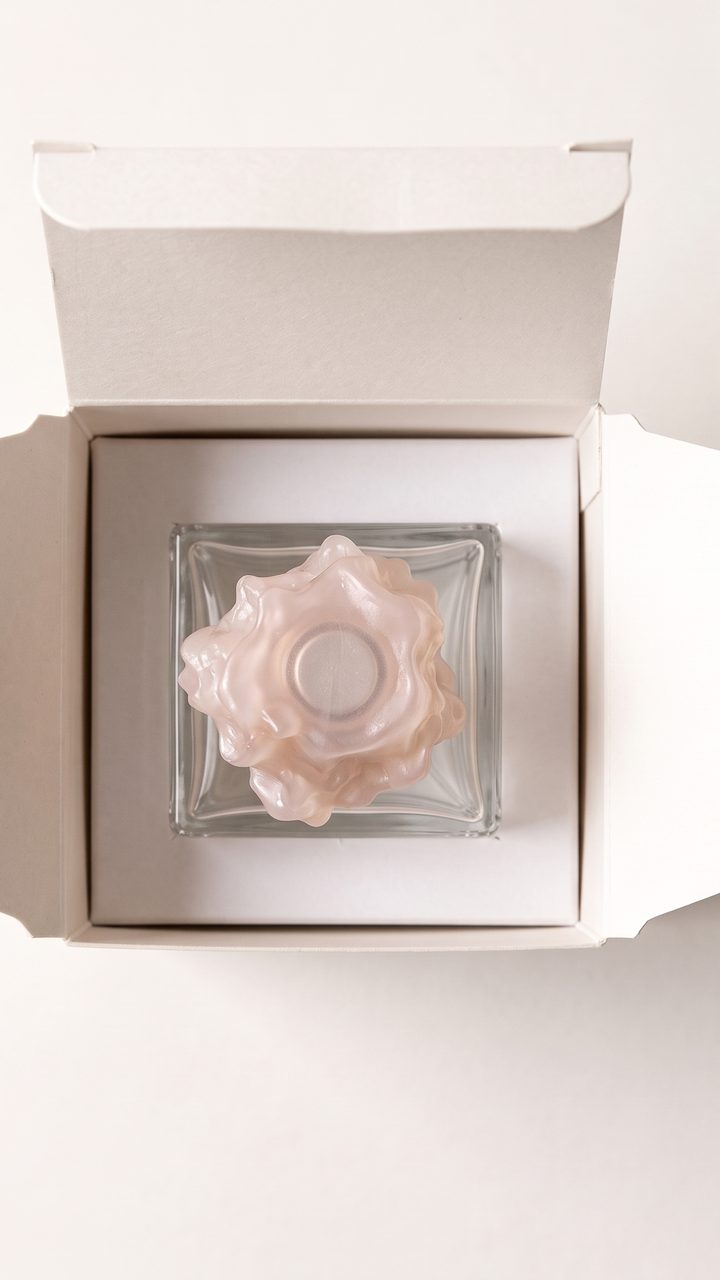
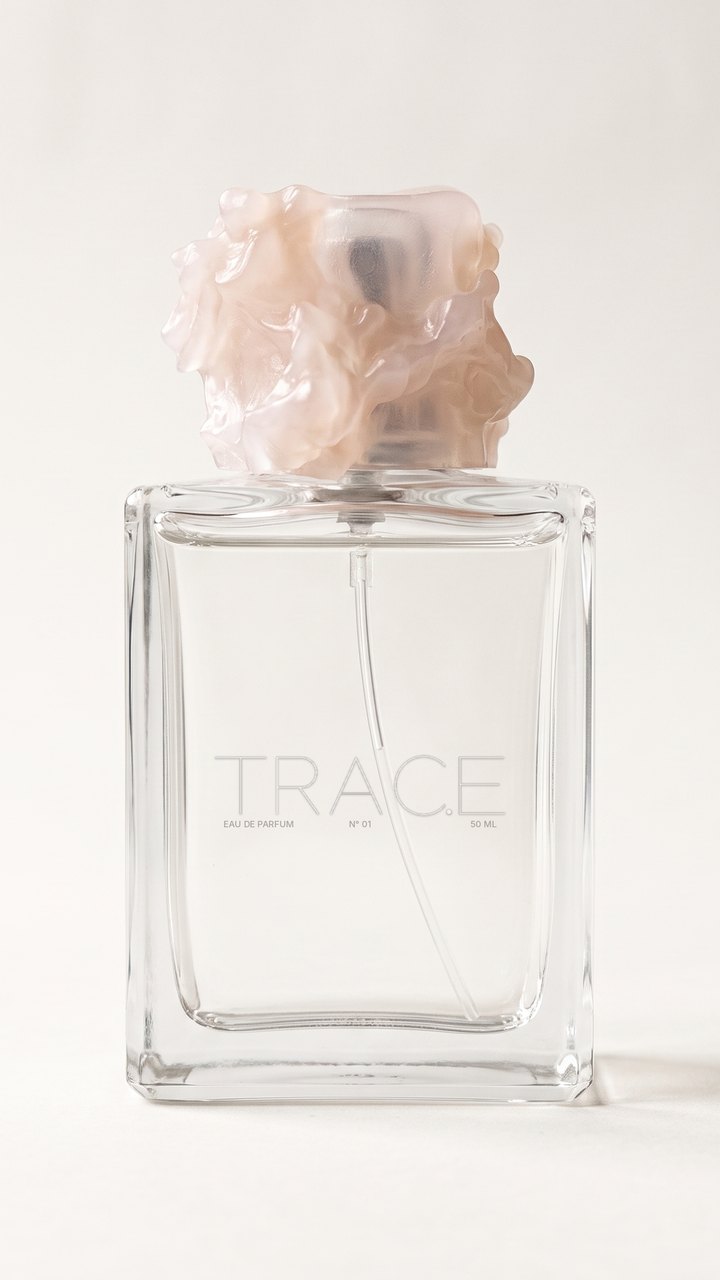
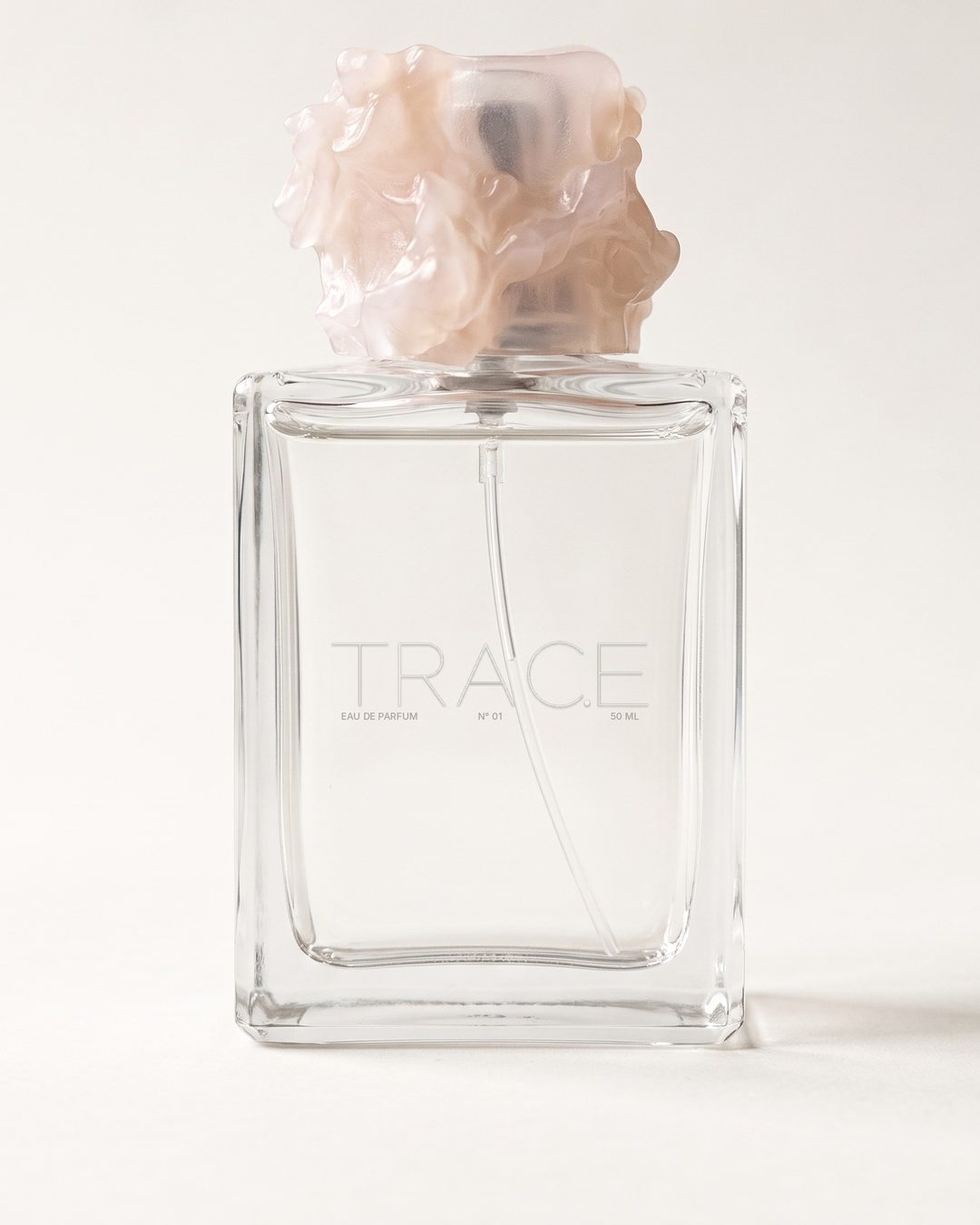
Products are generated blank. Every letter on glass and paper is set by hand afterwards, the only part of each image that isn’t a prediction.
packaging
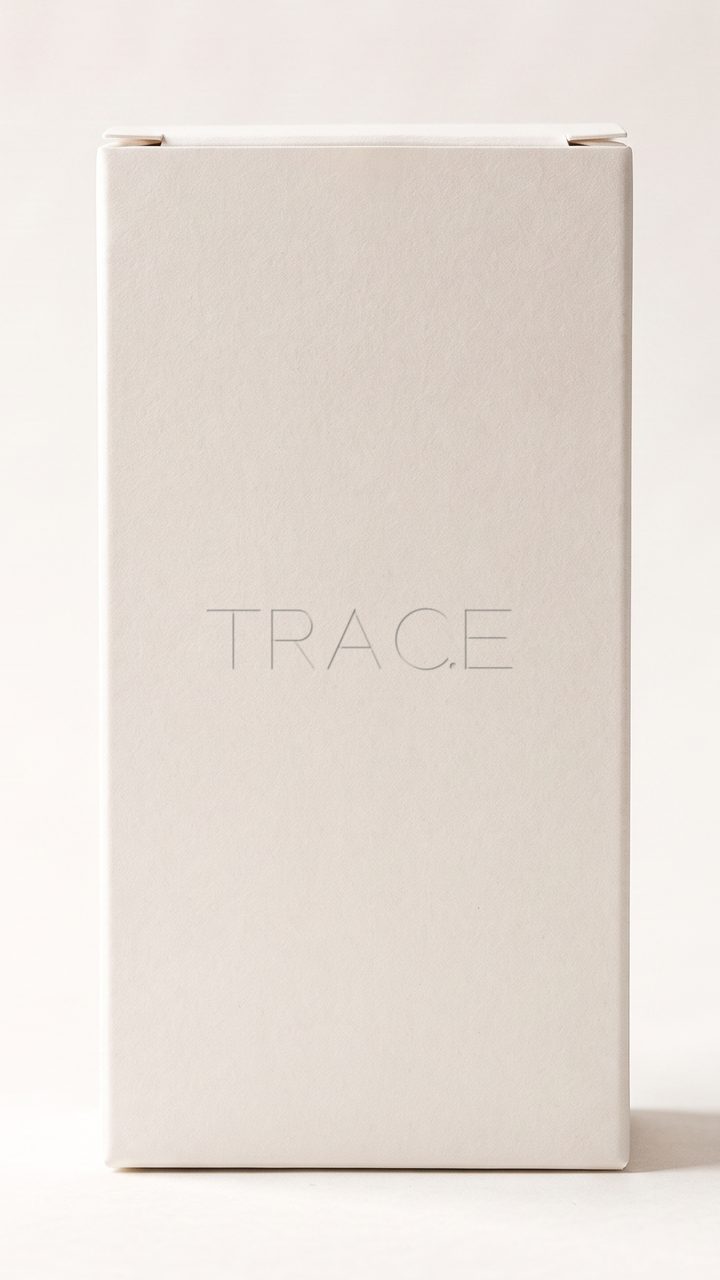
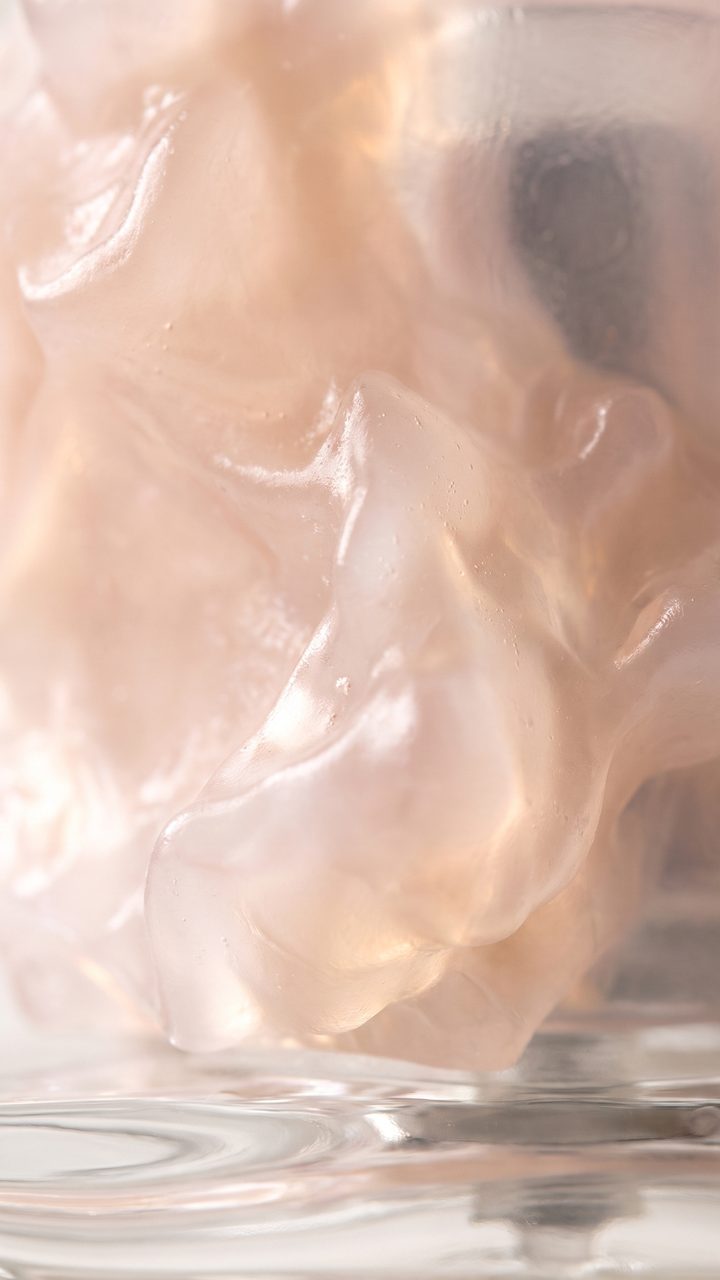
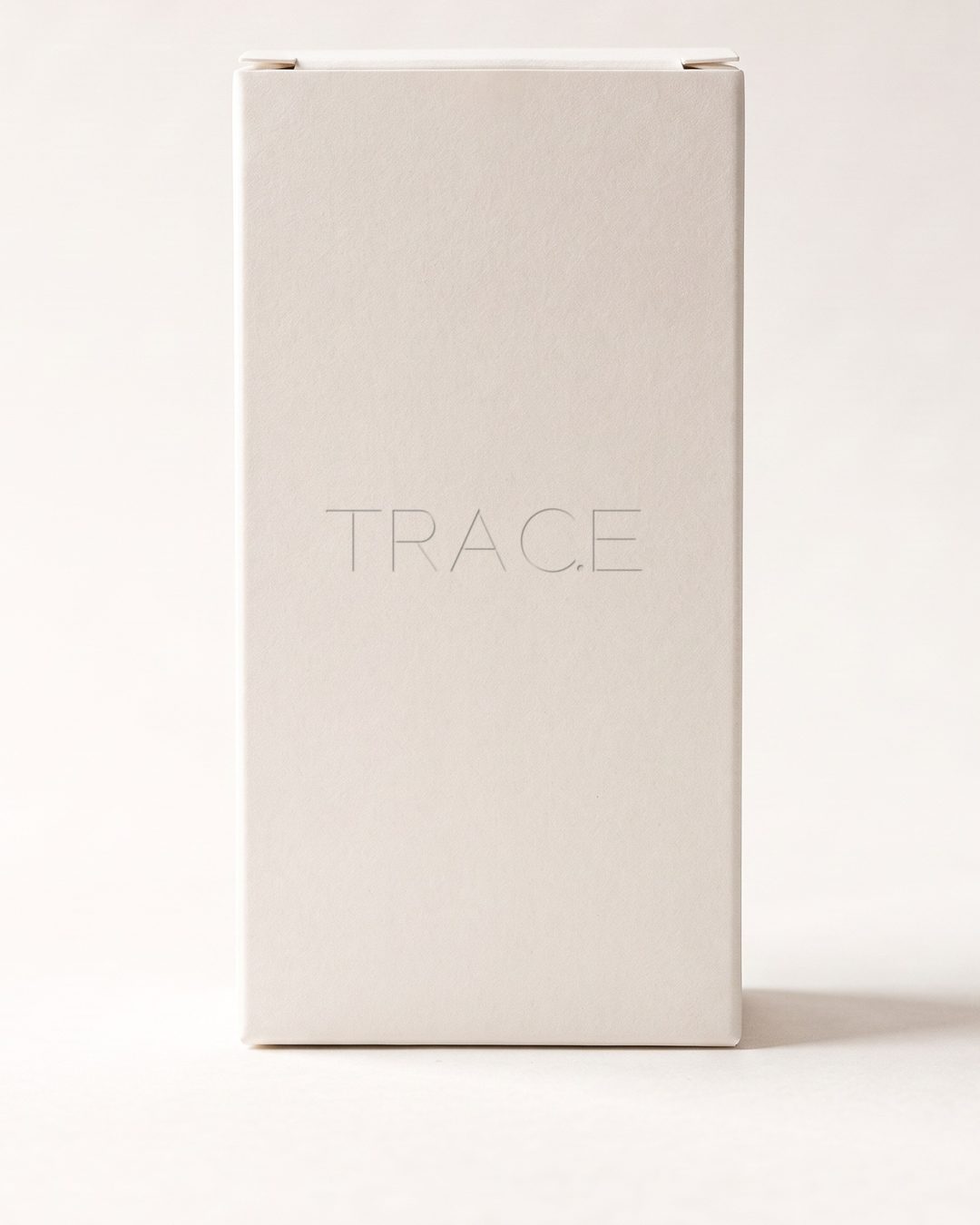
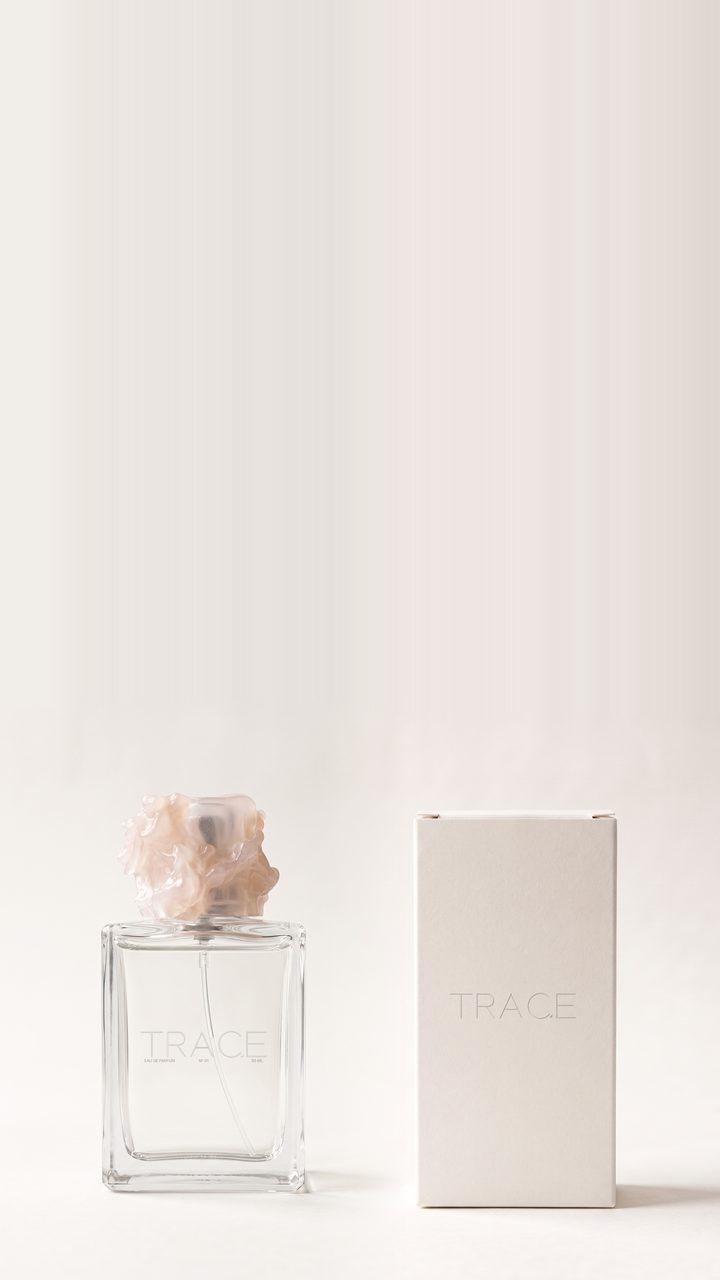
Clear glass that holds nothing but its etched name, a resin cap cast so that no two are alike, an uncoated carton that takes the logo as an imprint rather than ink. Everything is made to register touch.
identity
Monoline capitals drawn by hand, corrected optically so the hairline stays even. One gesture carries the idea: a mark that has left its place and still belongs to it.

HALDE